
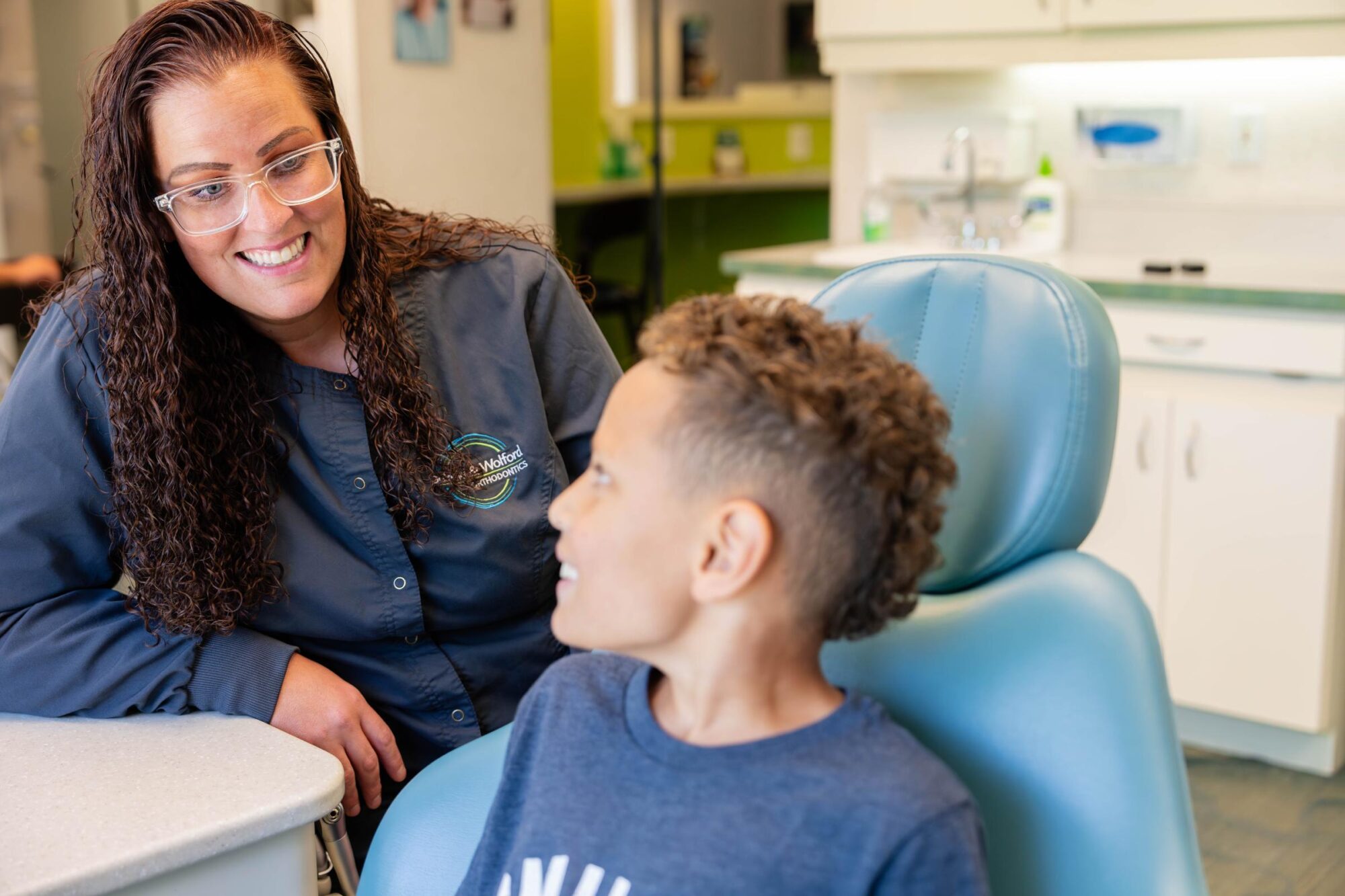
Getting braces is an exciting step toward the smile you’ve always wanted, but the first week can feel like a big change. Knowing what to expect in your first week with braces helps you feel prepared, confident and ready to handle the small adjustments along the way.
This day-by-day guide walks you through soreness, food choices, speech changes and simple comfort tips. You’ll also learn when something needs a call to the office and when it’s just part of the normal adjustment period.

What Is the First Week With Braces Really Like?
The first week with braces is your mouth’s adjustment period. Expect mild pressure, tenderness when biting and some tongue or cheek irritation for the first few days. This is completely normal. Your teeth are starting to shift, and the soft tissues inside your mouth are getting used to the new brackets and wires.
Soreness usually peaks around days 2 and 3, then fades quickly, and most people are eating and speaking normally by day 7. You might notice a slight lisp at first or feel self-conscious smiling in photos. That’s natural too.
For teens and adults alike, there’s an emotional side to the adjustment. Seeing your new smile in the mirror takes some getting used to. At Doleski & Wolford Orthodontics, we want you to know that whether you’re excited, nervous or a little sore, it’s all part of the process. It gets easier fast. If you’re curious how your braces compare to other options, our guide to the different types of braces explains how each one works.
Day-by-Day Timeline: Your First 7 Days With Braces
Here’s a realistic look at your braces day by day during that first week. Every mouth is a little different, but this timeline reflects what most patients experience.
Day 1: Placement day. You’ll feel mild pressure, not real soreness yet. Grab your orthodontic wax, stock up on soft foods and plan a quiet evening. Yogurt, smoothies and mashed potatoes are your best friends tonight.
Days 2 and 3: Peak soreness. This is usually the toughest stretch. Your teeth feel tender when you bite, and your cheeks may rub against the new brackets. Stick with cold foods, use over-the-counter pain relief as directed and rinse with warm saltwater. Ice water helps too.
Day 4: Discomfort eases. You’ll start to notice less pressure when chewing. Small mouth sores may pop up where brackets touch your cheeks, so apply wax to any rough spots.
Day 5: Speech normalizes. That slight lisp from day 1 is usually gone. Chewing gets easier, and you can add softer “normal” foods back in, like scrambled eggs, pasta and well-cooked vegetables.
Days 6 and 7: Back to (almost) normal. Soreness is largely gone. You’ll feel comfortable eating most braces-friendly foods, smiling freely and getting through a full school or work day without thinking about your braces every minute.
By the end of week one, the hardest part of getting used to braces is behind you.
How to Manage Soreness and Stay Comfortable
Managing braces soreness doesn’t have to be hard. A few simple tools and habits can make a big difference during those first few days.
What Over-the-Counter Options Help Most?
- Over-the-counter pain relief. Ibuprofen or acetaminophen, taken as directed on the label, works well for most people. If you’re not sure which one is right for you or your child, check with our team or your doctor first.
- Warm saltwater rinses. Mix a teaspoon of salt in a cup of warm water and swish two or three times a day. This soothes irritated gums and helps small mouth sores heal faster.
- Cold foods and ice water. Cold reduces inflammation and numbs tender spots. Smoothies, yogurt, ice cream and chilled applesauce are perfect. Sip ice water throughout the day.
Which Tools Protect Your Mouth From Brackets?
- Orthodontic wax. When a bracket rubs your cheek or lip, roll a small piece of wax into a ball and press it over the bracket. It creates a smooth barrier right away.
- Soft-bristle toothbrush. Your gums may be sensitive, so switch to a soft brush and use gentle, circular motions around each bracket.
- Synapse Dental Pain Eraser. We use this drug-free handheld tool during certain visits at Doleski & Wolford Orthodontics. It sends gentle pulses that help ease discomfort, so if you’re worried about soreness at your placement or adjustment appointments, ask our team about it.
Small habits add up. Once you settle into a routine, that first week goes by fast.
Foods to Eat vs. Foods to Avoid in Week One
Soft foods are the way to go for the first several days. Here’s a quick reference to help you plan meals and grocery runs.
| Foods to Eat | Foods to Avoid |
|---|---|
| Yogurt and cottage cheese | Nuts and seeds |
| Smoothies and milkshakes | Popcorn |
| Mashed potatoes | Hard candy and lollipops |
| Scrambled eggs | Chewing gum |
| Soft pasta and mac and cheese | Bagels and hard rolls |
| Soup and broth (lukewarm) | Raw apples, carrots and celery |
| Applesauce | Taffy, caramel and gummies |
| Ripe bananas and avocado | Corn on the cob |
| Pancakes and soft bread | Ice (no chewing!) |
| Well-cooked vegetables | Tough meats and jerky |
Use caution with very hot foods during your peak soreness days. Hot soup or coffee can make tender teeth feel worse, so let things cool a bit first.
What Does a 3-Day Soft Food Meal Plan Look Like?
Day 1
- Breakfast: Greek yogurt with ripe banana
- Lunch: Creamy tomato soup (slightly cooled) with soft bread
- Dinner: Mashed potatoes and scrambled eggs
Day 2
- Breakfast: Smoothie with berries, yogurt and protein powder
- Lunch: Mac and cheese
- Dinner: Soft pasta with marinara and ricotta
Day 3
- Breakfast: Oatmeal with honey and soft fruit
- Lunch: Avocado toast on soft bread
- Dinner: Baked fish with mashed sweet potato
By day 4 or 5, most patients can start adding softer “regular” foods back in. If you’re still weighing your options, our braces vs. clear aligners guide covers how each one fits into daily life.
Your First-Week Survival Kit: What You’ll Need
A small survival kit makes the first week much easier. The good news is that most of what you need is simple and easy to find.
- Orthodontic wax. Keep a packet in your bag, backpack or desk drawer.
- Soft-bristle toothbrush. Gentle on sore gums and effective around brackets.
- Interdental brushes. Small bristled picks that clean between brackets where a regular brush can’t reach.
- Floss threaders or a water flosser. Either option makes flossing around wires much easier.
- Over-the-counter pain relief. Keep ibuprofen or acetaminophen on hand for the first few days, as approved by your doctor.
- Travel kit. A small zip pouch with wax, a mirror and a toothbrush is perfect for school, work or weekend trips.
You can find these supplies at most pharmacies. Keeping everything in one spot means you’re never caught off guard, and it helps you build a routine from the very first day that pays off through your entire treatment.
When to Call Your Orthodontist vs. Wait It Out
Knowing the difference between a normal part of the adjustment period and a real concern saves you stress. Here’s a simple guide.
Call the office for:
- A poking wire that wax won’t cover
- A broken, loose or missing bracket
- Severe soreness that doesn’t improve after day 5
- A bracket you accidentally swallowed (call the same day for guidance)
- Any injury to the mouth, facial swelling or signs of infection (seek care right away)
Wait it out for:
- Mild soreness during the first 3 to 5 days
- Small mouth sores that are healing with saltwater rinses and wax
- A slight lisp that’s already improving
- Tenderness when biting down (this fades quickly)
You can always call our office with urgent questions. We’d rather hear from you and reassure you than have you worry at home, and a quick phone call often solves the issue in minutes.
Frequently Asked Questions About Your First Week With Braces
How long does braces soreness last?
Soreness typically lasts 3 to 5 days after your braces are placed. The peak is usually days 2 and 3, then it fades quickly. Over-the-counter pain relief, cold foods and warm saltwater rinses help most patients stay comfortable through this adjustment.
When can I eat normal food again?
Most patients are back to eating most of their favorite foods by day 7. You’ll still need to avoid certain foods for your entire treatment, like popcorn, hard candy and sticky caramels, but soft versions of pasta, bread, cooked vegetables and proteins are back on the menu by the end of week one.
Will I have a lisp with braces?
A slight lisp is common on day 1 and usually goes away within 3 to 5 days as your tongue adjusts. Reading out loud, singing or just talking more throughout the day speeds up the process. By day 5, most patients are speaking normally.
How do I floss with braces?
Flossing with braces takes a little practice. Floss threaders let you guide regular floss under the wire between each tooth. A water flosser is another great option that many patients find faster and easier. Ask our team to show you the technique at your next visit.
Can I play sports or instruments with braces?
Yes. You can keep playing sports, but you’ll want an orthodontic mouthguard for any contact activity. For wind and brass instruments, expect a short adjustment period of about 1 to 2 weeks as your lips get used to the brackets. Most musicians are back to full playing quickly.
What if a wire pokes my cheek?
Start with orthodontic wax. Dry the wire with a tissue, roll a small ball of wax and press it firmly over the poking end. This usually solves the problem right away. If the wire is long, has shifted or won’t hold wax, call our office and we’ll get you in for a quick adjustment.
The first week with braces is just the start of the road to a healthier, more confident smile. Take it one day at a time and lean on your care team when you have questions. To see every option we offer, explore our treatment options, or schedule a free consultation with Dr. Doleski and Dr. Wolford.